
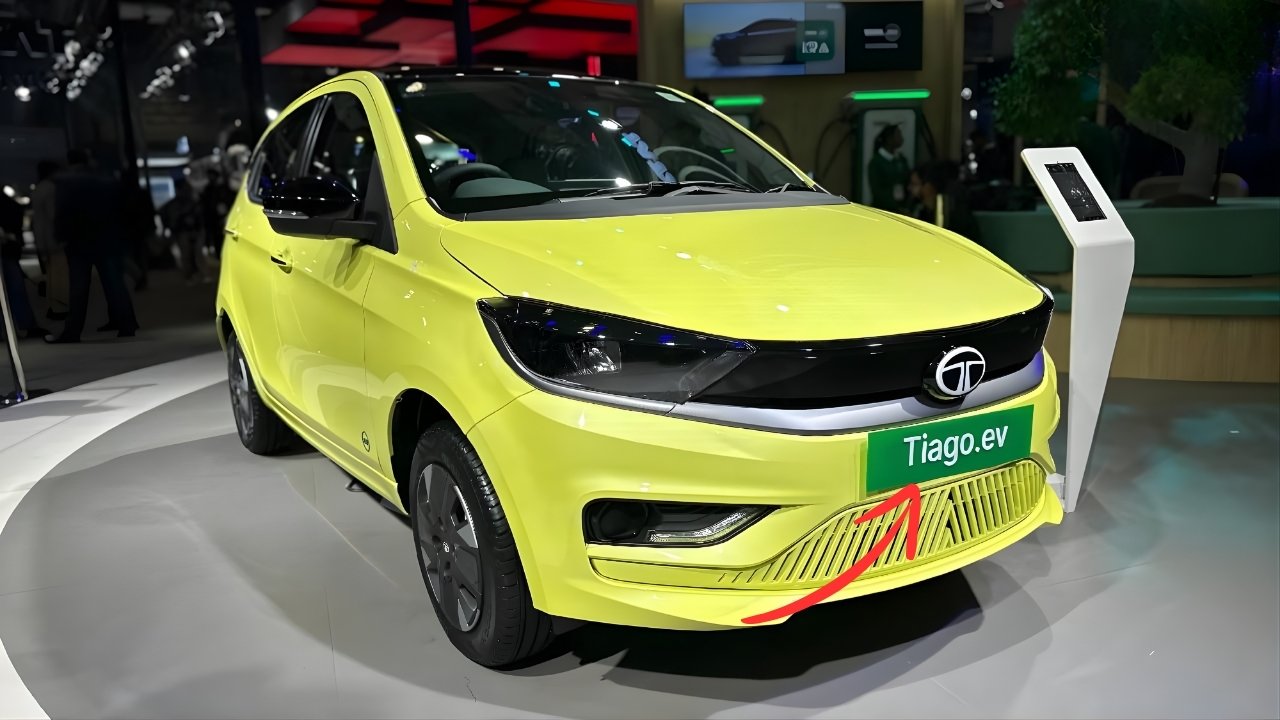
Tata Tiago EV : Tata Motors is gearing up to refresh one of its most popular electric vehicles, the Tiago EV, with a 2026 facelift that’s already turning heads from spy shots.
Spotted testing recently, this update promises subtle style tweaks and potential tech upgrades for city commuters craving affordability and green power.
Spy Shots Reveal Subtle Exterior Changes
The test mules caught on camera show minimal cosmetic tweaks that keep the Tiago EV’s familiar hatchback charm intact.
Expect revised LED headlamps with sleeker housings, updated alloy wheels, and maybe a new bumper design for a sharper front fascia – nothing revolutionary, but enough to modernize its look.
New badging and a shark-fin antenna hint at small aero improvements, while the floating roof effect gets refined without overhauling the silhouette.
These changes align with Tata’s strategy to evolve without alienating loyal buyers who love the compact footprint perfect for Indian roads.
Insiders suggest connected LED tail lamps could join the party, enhancing nighttime visibility and safety – a nod to rival EVs like the MG Comet EV gaining ground in the sub-10 lakh segment.
Powertrain Stays Reliable, No Big Leaps Expected
Under the hood, don’t anticipate drastic powertrain shake-ups; Tata’s sticking to the proven formula.
The Medium Range (MR) variant pairs a 19.2 kWh battery with a 60 hp motor churning 110 Nm torque, claiming 223 km MIDC range – real-world around 168 km for daily hustles.
The Long Range (LR) steps up to 24 kWh, 74 hp, 114 Nm, and 293 km claimed range, hitting 0-60 km/h briskly.
Fast charging remains a highlight: 58 minutes for MR to 80%, keeping downtime low for urbanites.
Rumors swirl about a Punch EV-inspired 35 kWh pack pushing over 450 km range, but that’s wishful for now – current setup prioritizes cost over long hauls, ideal for short commutes under 100 km daily.
Interior Upgrades Focus on Comfort and Tech
Inside, the 2026 model builds on 2025’s facelift with chrome accents replacing blue EV badges, a 10.25-inch touchscreen handling infotainment slickly, and auto headlamps/wipers as standard goodies. No auto-dimming mirror yet, but reverse camera with guidelines adds parking ease.
The cabin feels premium with updated AC vents and instrument cluster surrounds, suiting budget buyers upgrading from petrol Tiagos.
Features like cruise control, push-button start, and connected car tech via iRA app keep it competitive against Citroen eC3 or base Nexon EV.
Safety whispers include structural tweaks from the older X0 platform toward Acti.ev architecture – think better crash protection and ADAS hints like lane-keep assist if Tata pushes boundaries.
Pricing and Offers Sweeten the Deal
Starting at ₹7.99 lakh ex-showroom, the Tiago EV undercuts rivals, with on-road Mumbai prices hitting ₹11.86 lakh for top trims.
January 2026 brings juicy incentives: ₹70,000 Green Bonus across variants, plus ₹30,000 exchange/scrappage and loyalty bonuses up to ₹50,000 for Tata EV upgraders.
Post-facelift, expect a ₹25,000-50,000 bump, landing MR at ₹8.5-9 lakh and LR at ₹11-12 lakh ex-showroom.
These deals make it a steal amid rising petrol costs, targeting first-time EV adopters in metros like Delhi and Mumbai.
Government subsidies under FAME III could further slash effective prices, boosting sales that already dominate 40% of India’s EV hatch market.
Also Read This : Samsung Galaxy A55 – Powerful processor smartphone with 5500mAH battery backup, camera is 64MP
Why the Tiago EV Still Rules Urban EVs
Tata’s Tiago EV isn’t just surviving; it’s thriving as the gateway drug to electrification. With 5.7-second 0-100 km/h sprints (LR), zippy handling, and low running costs (₹1-2/km), it flips the script on range anxiety for 70% of Indians driving under 50 km daily.
Spy shots confirm a mid-2026 launch, likely around Diwali, aligning with festive demand.
Competitors like the upcoming Renault EV or Hyundai Inster face tough odds against Tiago’s service network spanning 1,000+ cities.
For families in Haryana or bustling Ambala streets, this facelifted EV promises hassle-free ownership with OTA updates and home charging simplicity – no more fuel queues.
Tata Tiago EV Market Impact and Future Outlook
The refresh arrives as EV sales hit 2 million units annually in India, with Tata commanding 60% share.
Tiago EV’s evolution underscores Tata’s pivot to affordable electrics, pressuring legacy players to electrify faster.
Potential Acti.ev shift could cut weight by 10%, extending range without bigger batteries – a smart play for efficiency.
Add V2L (vehicle-to-load) like Punch EV, and it becomes a home power bank too.
Environmentally, each Tiago EV saves 5 tons CO2 yearly versus petrol counterparts, accelerating India’s 30% EV penetration goal by 2030.
For content creators tracking auto trends, this facelift is gold: SEO-friendly buzz on “best EV under 10 lakh” searches.